

Agencies and B2B SaaS teams have different needs than internal product meetings. They juggle clients, partners, deadlines, and revenue. The right tl;dv alternatives help you keep scope tight, lock in next steps, and share polished summaries with clients while keeping risk notes internal.
This list focuses on what matters in agency and SaaS workflows: multi-client workspaces, permissioning, branded client views, action tracking, and reliable CRM/PM syncs. We’ll show where each platform fits, from quick capture to full delivery workflows. So your team spends less time rewriting notes and more time driving outcomes.
Overview at a Glance
- FuseBase – Best for client-facing teams that need client-ready recaps, private risk notes, and automatic tasks/CRM updates in one bot-free workspace.
- Tactiq – Best for fast, real-time transcription and quick action items during live calls, with lightweight setup for small teams.
- Otter.ai – Best for shared, accessible documentation with live captions and collaborative notes for hybrid teams.
- Fireflies – Best for multilingual, platform-agnostic capture at scale with affordable rollout and searchable conversation history.
- Supernormal – Best for standardized, decision-focused documentation using templates, with instant agendas, actions, and summaries.
- Read.ai – Best for engagement analytics and coaching, tracking sentiment, talk time, and participation with quick summaries.
What is tl;dv?
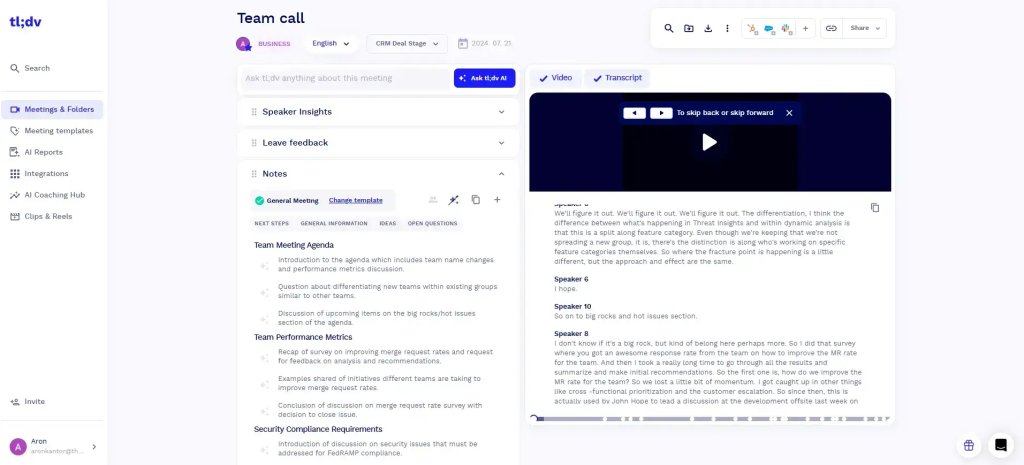
tl;dv is an AI meeting recorder and transcription tool for Google Meet, Microsoft Teams, and Zoom. It joins your calls, records in high quality, and delivers real-time transcripts plus AI-generated summaries. You can tag moments, share clips, and search across a library of past meetings, with transcription available in 30+ languages. A Chrome extension and tight Zoom integration make it quick to deploy, and the free plan covers core recording and transcription.
For agencies and B2B SaaS teams, tl;dv shines when you need researcher-style capture and clean post-call summaries across interviews, product sessions, and internal reviews. It is less focused on CRM-first workflows and advanced conversation intelligence, so revenue teams often pair it with other tools for pipeline hygiene, coaching, and automated follow ups.
Key features:
- Live recording and real-time transcription on Google Meet, Microsoft Teams, and Zoom
- 30+ language support with speaker identification and timestamps
- AI-generated summaries post-call, including next steps and key themes
- Research-friendly workflows for user interviews, workshops, and product sessions
- Searchable recording library with keyword search across transcripts
- Chrome extension and native Zoom integration for quick deployment
- Collaboration tools: comments, mentions, and shareable notes
- Multi-meeting trend detection and theme analysis (emailable summaries/reports)
Why Agencies Look for tl;dv Alternatives?
tl;dv is strong for research-style capture, but agencies and revenue teams often hit these ceilings when they try to operationalize it:
- No native dual-output to separate polished client recaps from private risks and coaching notes.
- Limited opinionated handoffs into CRM/PM
- Lacks advanced analytics like talk-pattern trends, coaching workflows, and AI call scoring seen in CI-first tools.
- Bot-join prompts can add friction with clients and raise compliance questions in regulated accounts.
- Harder to surface churn risks, renewal blockers, or scope creep across many calls.
- Cost-to-impact: For the feature depth, total cost can feel high vs alternatives that deliver clearer CRM hygiene, tasks, and analytics out of the box.
tl;dv is a capable recorder for interviews and workshops, but if you need client-ready deliverables, private risk notes, and automatic task/CRM handoffs, you’ll likely need an alternative designed for client-facing workflows.
Top 6 tl;dv Alternatives
FuseBase
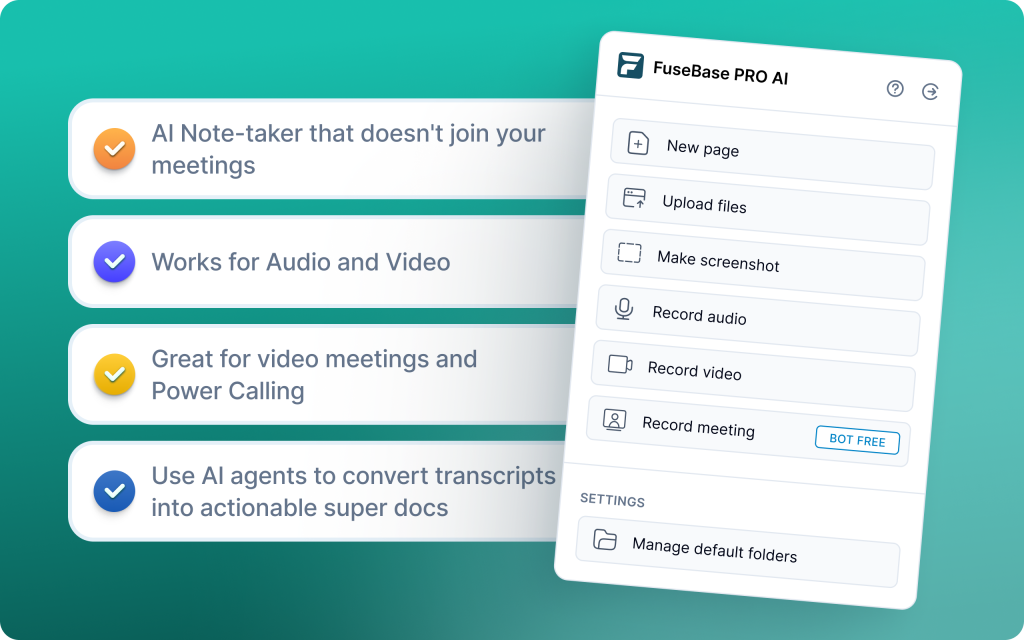
FuseBase is a bot-free AI meeting recorder and workspace built for client-facing teams. Every Zoom, Teams, or Meet call becomes a shareable mini-room with a client-ready recap, attached files, and clear next steps. You get two synchronized outputs by default: a polished external summary for clients and a private internal stream for risks, coaching notes, and tasks. The recorder becomes your wedge into ongoing deal, onboarding, and delivery rooms with branded portals that clients can access, improving time to value and reducing missed commitments.
Why choose FuseBase
Choose FuseBase if you want meeting output to translate directly into work and revenue outcomes. Its bot-free capture removes join-as-a-bot friction and eases consent, while the built-in mini-rooms and portals keep clients, files, and next steps aligned in one hub. The internal-versus-external split protects sensitive coaching and risk notes without slowing client communication. Its AI agents don’t just summarize, they validate, flag, and push actions into your systems so follow-ups are tracked and executed. For agencies, B2B SaaS sales/CS, and professional services, this means faster adoption, cleaner CRM hygiene, tighter scope control, and a measurable drop in unlogged follow-ups.
Tactiq
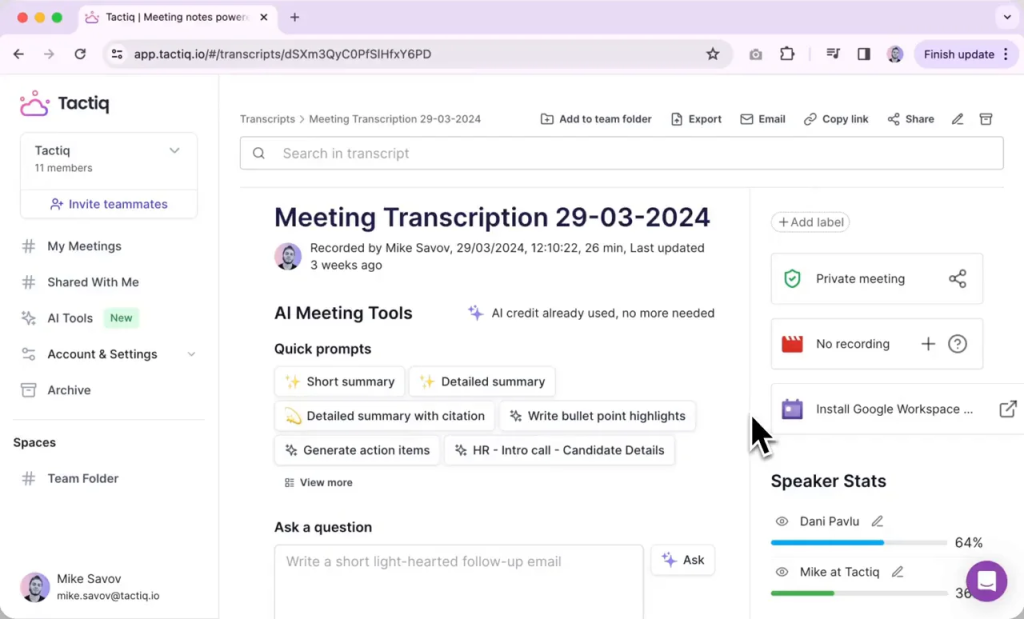
Tactiq is an “AI Meeting Kit” for fast, real-time transcription. It captures speaker‑identified transcripts with timestamps, then auto‑summarizes, surfaces action items, and can suggest next‑meeting agendas. With a Chrome extension, 60+ language support, engagement analytics, and quick links to tools like Slack or Jira, it’s ideal for individuals and small teams who want accurate notes without a heavy platform. Video recording is limited, but setup is near‑instant and the learning curve is minimal.
Why choose Tactiq
Choose Tactiq if you want instant, in-meeting transcription and post-call summaries with minimal setup, strong multilingual coverage, and practical add-ons like engagement analytics, sentiment cues, and task assignment. It fits teams that live in Meet, Teams, or Zoom and need to turn conversations into Jira tickets or Slack updates immediately, without managing a heavy platform. If speed, simplicity, and real-time clarity matter more than deep sales coaching or multi-meeting analytics, Tactiq is a smart, lightweight pick.
Otter.ai
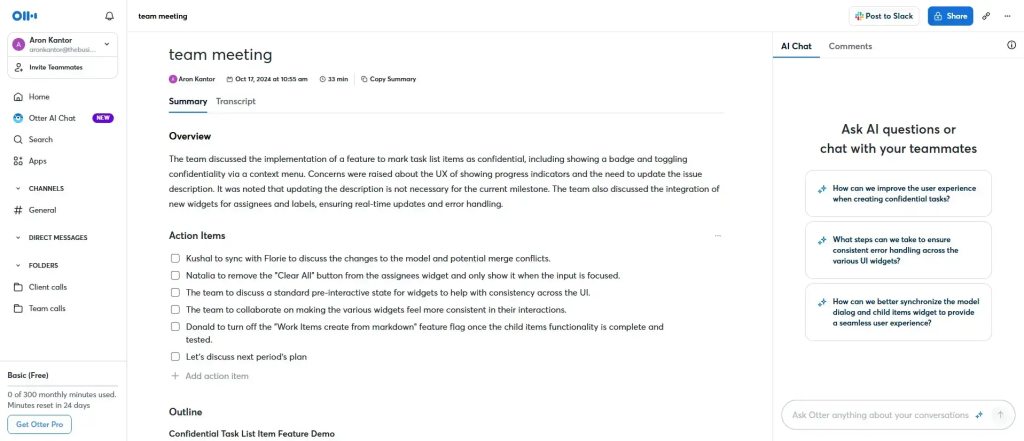
Otter.ai provides real-time transcription with collaborative, shared notes that teams can access and edit during the meeting. Live captions and in-meeting annotations (highlights, comments, tasks) help hybrid teams keep a single source of truth without waiting for handoffs. After the call, Otter auto-sends summaries and action items, supports file uploads for transcription, and offers mobile access. Note that most plans exclude video recording and multilingual support is limited (primarily English with partial Spanish and French).
Why choose Otter.ai
Choose Otter if your priority is inclusive, shared documentation in real time like live captions, simultaneous note-taking, and quick summaries that keep everyone aligned without post-meeting delays. It’s a strong fit for hybrid teams and organizations that value accessibility and collaborative notes over video capture or deep analytics.
Fireflies.ai
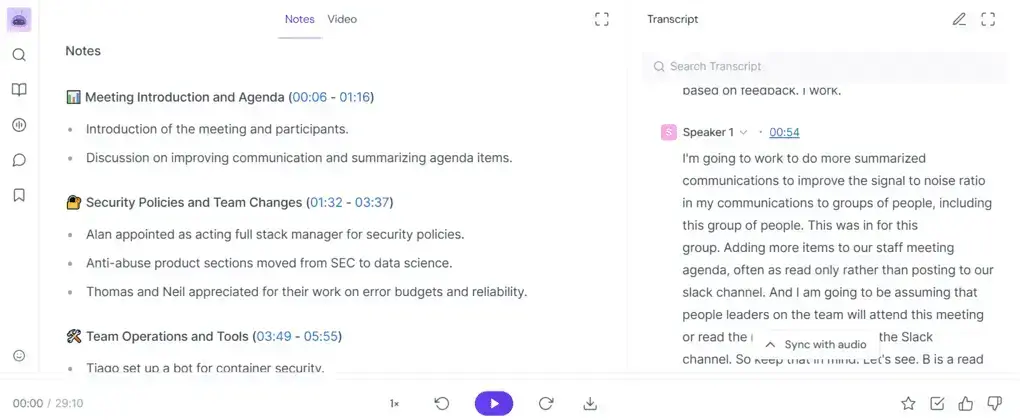
Fireflies.ai automates note-taking across Zoom, Microsoft Teams, Google Meet, and more. It supports accurate transcription in 40+ languages, with searchable conversation history, tagging, and filters; the free plan includes 800+ minutes of storage and three file uploads. Paid tiers add advanced collaboration and unlimited storage, plus integrations across conferencing, collaboration, and CRM tools, making it fast to roll out team-wide. Tradeoffs to note: video recording is Pro-only, many integrations sit behind paid plans, and the bot can take time to join.
Why choose Fireflies.ai
Pick Fireflies if you need broad platform coverage, multilingual transcription, and quick, low-friction deployment across your organization at a reasonable cost. It’s a strong choice for standardizing capture and search across mixed tool stacks; if you need deeper coaching or structured enablement, pair it with a CI tool.
Supernormal
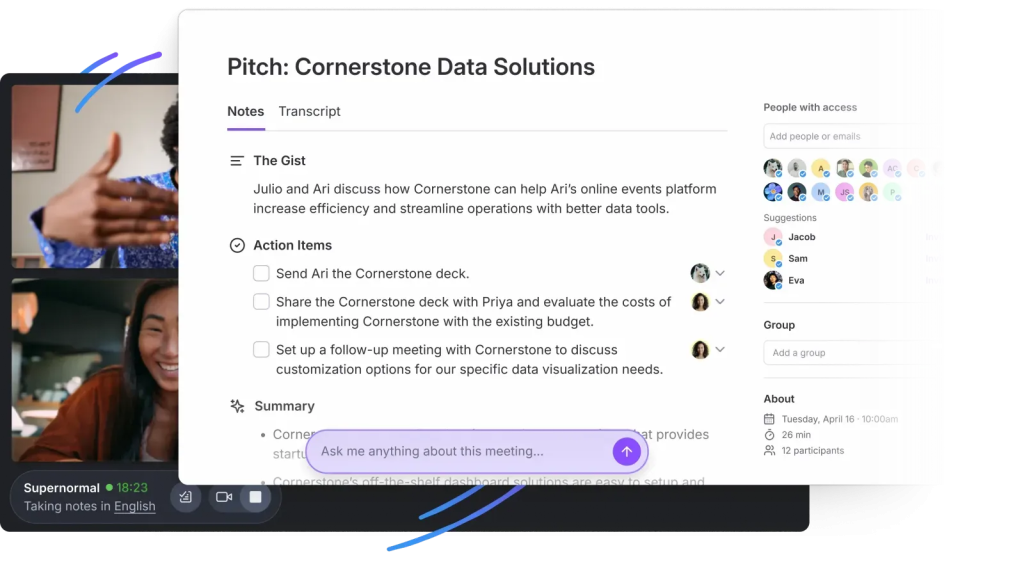
Supernormal is a meeting assistant built to produce consistent, decision-focused documentation for Zoom, Google Meet, and more. It generates real-time agendas, structured recaps, and action items during the call, so teams leave with clear next steps without extra cleanup. Templates and AI automation standardize how actions, decisions, and follow-ups are captured and assigned, turning every meeting into an immediate execution plan.
Why choose Supernormal
Choose Supernormal if your priority is standardized, high-quality meeting documentation that’s created in real time and synced into your collaboration stack. Its template-first approach, automated action item extraction, and decision tracking are ideal for remote teams that run frequent calls and need consistent, ready-to-use outputs after every meeting.
Read.ai
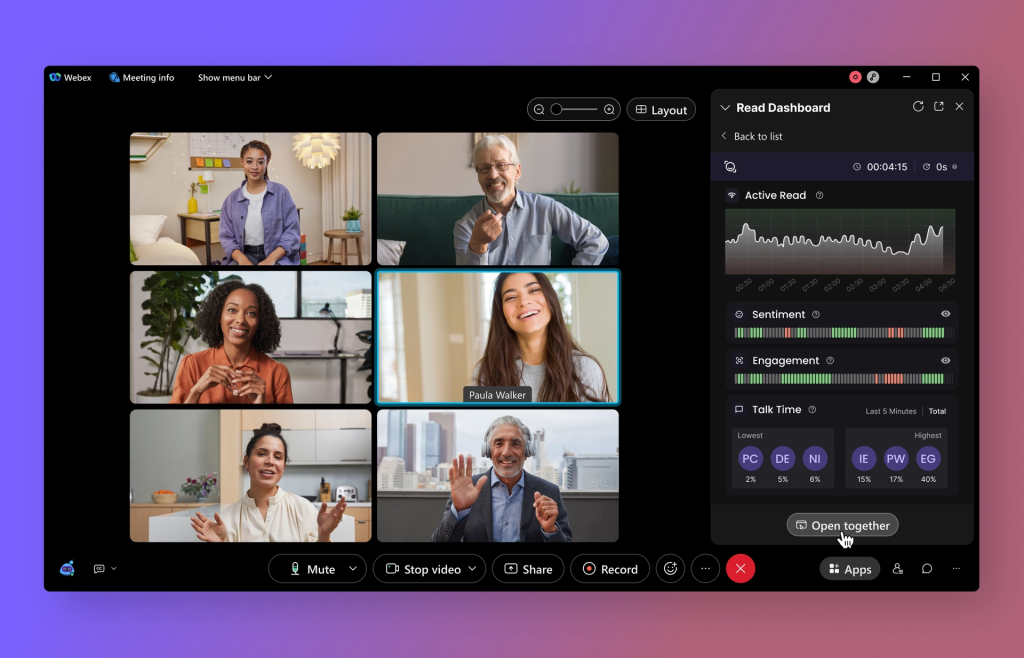
Read.ai centers on automatic documentation and in‑meeting intelligence, transcribing calls while tracking engagement, sentiment, and speaker performance. It blends AI summaries with coaching cues tied to talk time, participation, and delivery, so teams can improve how they run client conversations. Setup is quick, summaries are clean, and branding in-session keeps participants oriented, making it a practical fit for teams that value performance signals as much as notes.
Why choose Read.ai
Choose Read.ai if you want fast, reliable summaries plus rich engagement analytics and coaching insights to raise meeting quality. It’s especially useful for client success and account teams who need to understand participation and sentiment patterns across calls, then quickly retrieve answers from their meeting history without manual digging. If you need deeper tasking and CRM handoffs, pair Read.ai with a workflow-first platform like FuseBase.
Summary
Top tl;dv alternatives for agencies and B2B SaaS go beyond transcripts. They create client-ready recaps, keep risk notes private, push next steps into CRM and project tools, and surface trends across accounts. Teams compare options like FuseBase, Tactiq, Otter, Fireflies, Supernormal, and Read.ai for speed to value, bot vs bot-free capture, language coverage, and depth of workflow handoffs. The winners reduce missed follow-ups, tighten scope, and improve utilization by turning every call into tasks, trackers, and clear client communication.
If your workflow hinges on client-facing outcomes, prioritize tools that split external and internal summaries, automate task creation, and integrate cleanly with your stack. FuseBase stands out as a strong starting point for agencies and B2B SaaS because it pairs recording with client-ready outputs and operational follow-through, while other tools in this list offer compelling strengths in transcription speed, coaching analytics, or standardized documentation.